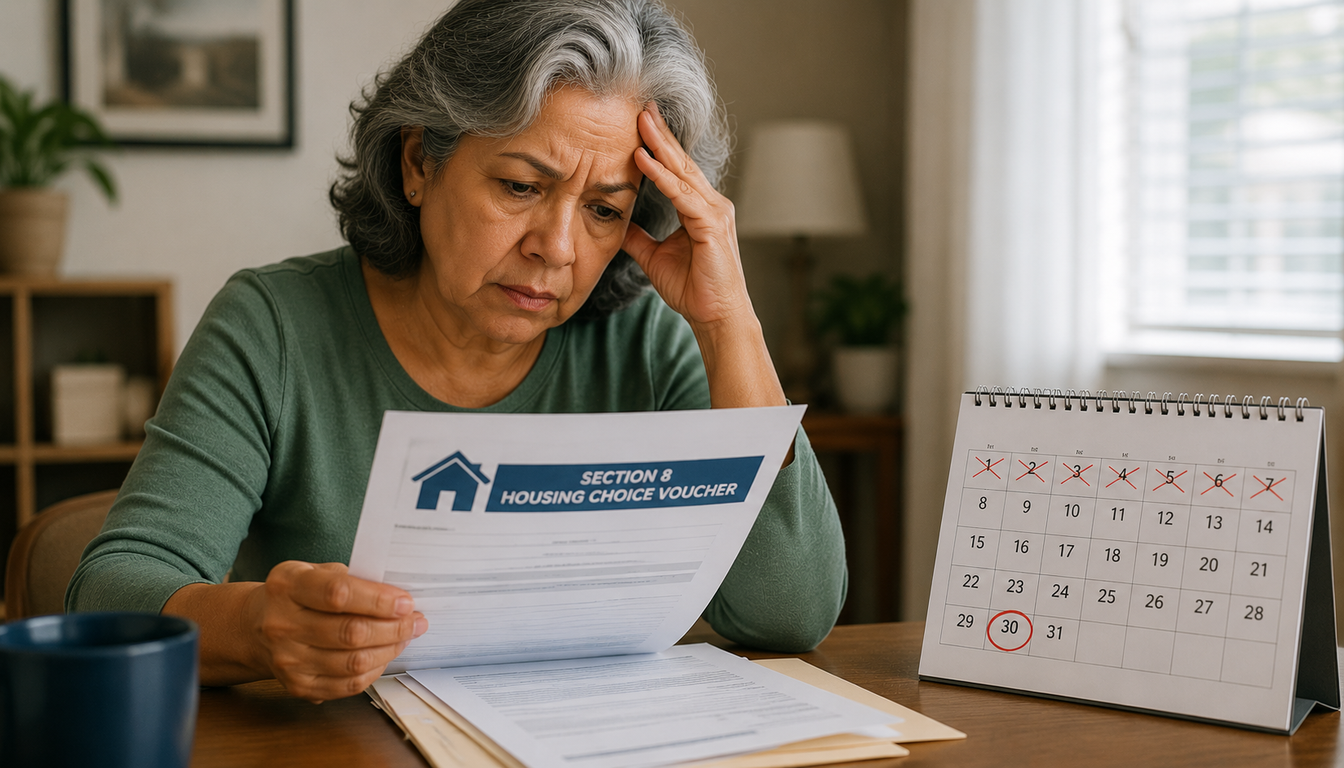

One of the biggest concerns people have about housing assistance is what happens if they start earning more money. Will they lose their voucher? Will their rent go up? Will they get kicked out of the program?
These are fair questions — and the answers are more reassuring than most people expect. The housing assistance system is designed to support people as their financial situation improves, not punish them for it. Understanding exactly how income changes affect your benefits helps you make better decisions about work, income, and your housing future.
The Basic Formula: You Always Pay Around 30%
Whether you're on the Section 8 Housing Choice Voucher Program or living in Public Housing, the core formula stays the same: you pay approximately 30% of your adjusted monthly income toward rent. The program covers the rest.
This means that if your income goes up, your rent contribution goes up — but so does your ability to pay it. You don't suddenly lose all your assistance the moment you earn more. The benefit adjusts gradually as your income changes.
Here's a simple example:
- If your adjusted monthly income is $1,000, you pay around $300 toward rent
- If your income increases to $1,400, you pay around $420 toward rent
- The voucher or subsidy decreases by the difference — but it doesn't disappear
The program is built this way intentionally. It's meant to help households transition toward financial stability without creating a situation where earning more money immediately leaves you worse off.
You Are Required to Report Income Changes
This part is not optional. Both the Section 8 program and public housing require you to report any changes in household income to your local Public Housing Authority (PHA) in a timely manner.
What counts as an income change you need to report:
- Starting a new job or returning to work
- Getting a raise or working more hours
- Receiving a new source of income — child support, alimony, a second job
- A household member turning 18 and starting to work
- Changes to Social Security, disability, or unemployment benefits
Most PHAs require you to report changes within 10 to 30 days, depending on their specific rules. Check with your housing authority to confirm their exact reporting window.
Failing to report income increases — especially if they're discovered later — can result in repayment demands, program violations, or termination. Reporting on time protects you. It also allows the PHA to recalculate your rent correctly so you're not accidentally underpaying, which creates problems down the line.
The HUD guidelines on participant obligations are clear that keeping your income information current is your responsibility as a program participant.
How Rent Is Recalculated After a Change
When you report an income increase, your PHA will recalculate your rent contribution. This process is called an interim reexamination or interim recertification. It happens between your regular annual recertification dates specifically because of a change in your circumstances.
Here's what that looks like in practice:
Your PHA will ask you to provide documentation of the new income — pay stubs, a benefit award letter, or other proof. They'll calculate your new adjusted monthly income, apply the 30% formula, and issue you a new rental amount. Your portion of rent goes up, and the subsidy the program pays goes down by the same amount.
The change typically takes effect at the start of the following month or the next rent cycle, depending on your PHA's policies. Ask your housing authority specifically when the new amount will kick in so you can plan accordingly.
When Does Income Become Too High to Stay in the Program?
This is the question most people are really asking — and the answer depends on the program and your location.
For Section 8 Housing Choice Vouchers, the program does not have a hard income cutoff that immediately removes you once you exceed it. However, if your income rises to the point where your 30% contribution equals or exceeds the full rent for your unit, your subsidy effectively goes to zero. At that point, the PHA may determine that you no longer need assistance and terminate your participation.
This doesn't happen overnight. It happens gradually as income rises. And for most households receiving Section 8, reaching that level of income is a positive milestone — it means you've achieved a level of financial stability where you can cover housing costs on your own.
For Public Housing, there is no upper income limit for residents who are already housed. Once you are in a public housing unit, you can stay even if your income rises — you simply pay more rent as your income increases. However, HUD does allow PHAs to establish policies for over-income families, and some housing authorities may ask households whose income significantly exceeds the limits to transition out over time.
Check with your specific local PHA to understand their policies on over-income households, as these vary.
The Earned Income Disallowance: A Benefit for Working Households
If you are in public housing or receiving project-based rental assistance and you start working or increase your earnings after a period of unemployment or disability, you may qualify for something called the Earned Income Disallowance (EID).
The EID is a temporary benefit that allows eligible households to exclude a portion of their new earned income from rent calculations for a limited period — typically 12 months at full exclusion, followed by 12 months at 50% exclusion.
This means if you go back to work and your income jumps, the EID gives you breathing room — your rent doesn't increase as fast as it otherwise would, giving you time to stabilize before the full 30% formula applies to your new earnings.
The EID program guidelines are published by HUD and explain the eligibility rules and time limits in detail. Ask your PHA whether you qualify if you've recently re-entered the workforce.
Get Clarity on Your Current Eligibility at Section 8 AI
If your income has recently changed — or you're thinking about making a move that would affect your earnings — it's smart to get a clear picture of where your household stands right now.
Section 8 AI generates a personalized housing eligibility report based on your current income, household size, and location. It tells you which programs your household qualifies for at your current income level, how your figures compare to the limits in your area, and what options are available to you today.
Whether you're already in a program and wondering how an income change affects you, or you're thinking about applying for the first time, your report gives you a concrete, clear starting point.
Go to Section 8 AI and get your personalized housing eligibility report. Understanding your numbers before you make decisions — about work, income, or housing — puts you in a much stronger position.
What You Should Never Do: Hide Income Increases
It's worth saying directly: do not hide income increases from your housing authority.
Some people worry that reporting more income will hurt them, so they don't report it. This is a serious mistake. Housing fraud — including failure to report income — is a federal offense. The consequences can include repayment of overpaid subsidies, removal from the program, and in serious cases, criminal prosecution.
The HUD Office of Inspector General investigates housing fraud and takes it seriously. PHAs verify income through annual recertifications and cross-check with IRS and Social Security data. Unreported income typically gets discovered.
The right move is always to report honestly and on time. The adjustment to your rent will be manageable, and your long-term participation in the program stays protected.
Planning Ahead for Financial Growth
The goal of housing assistance is to give households a stable foundation to build from — not a permanent ceiling. As your income grows, your rent contribution increases, your subsidy decreases, and eventually you may reach a point where you no longer need the program at all. That's a success, not a loss.
While you're in the program, use the stability it provides to build savings, improve your credit, and work toward long-term housing goals. Resources like the HUD Family Self-Sufficiency Program help Section 8 participants build savings escrow accounts as their income grows — worth asking your PHA about if you're focused on long-term financial progress.
For help finding affordable housing listings in your area as your situation evolves, visit our partner site Section 8 Search — a practical resource for voucher holders at every stage.
The Bottom Line
Earning more money does not mean losing your housing assistance overnight. Your rent contribution adjusts with your income, your subsidy decreases gradually, and you stay protected as long as you report changes honestly and on time.
Know the rules. Report changes promptly. Take advantage of programs like the Earned Income Disallowance if you qualify. And keep a clear picture of where your household stands.
Visit Section 8 AI to get your personalized housing eligibility report and understand exactly how your income affects your options today.