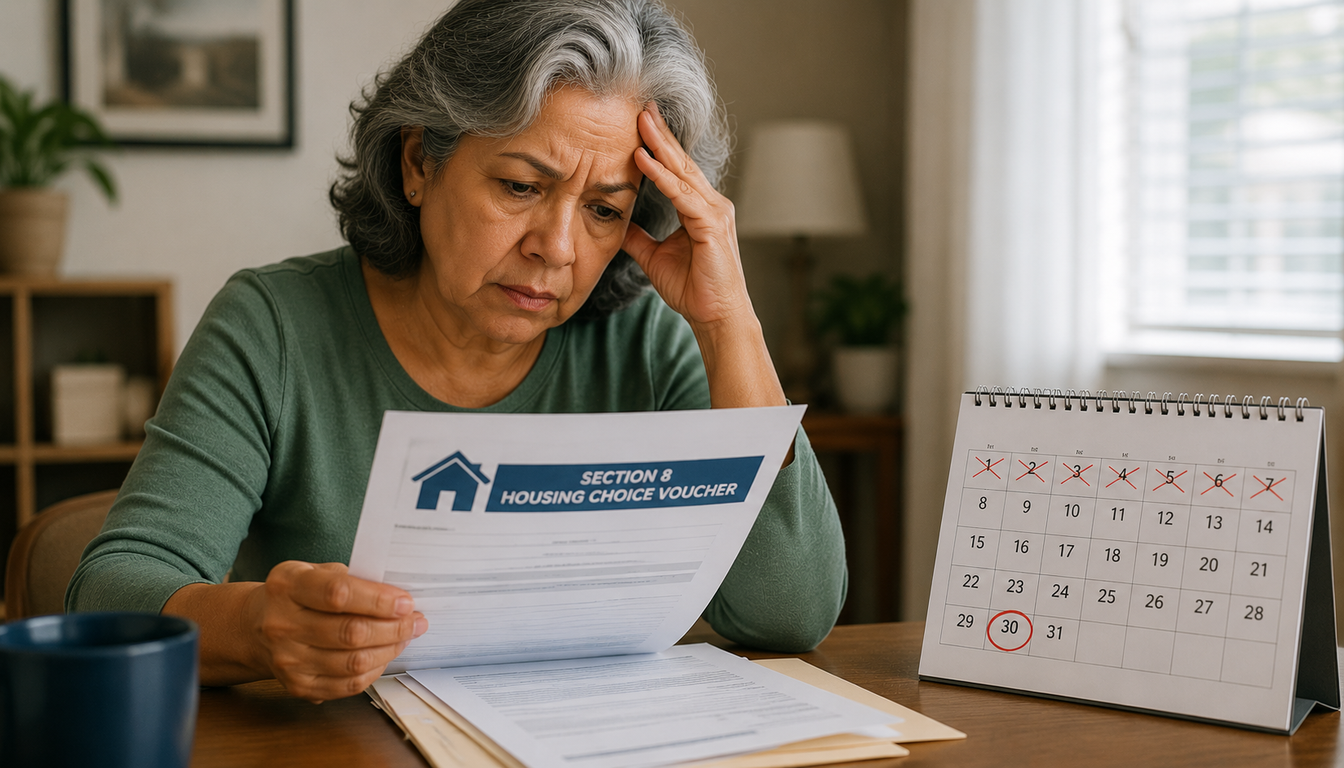

Some housing situations can't wait. If you're facing eviction, have lost your home, or are days away from losing your housing and have no backup plan, you need to know what resources exist and how to access them quickly.
This article is built for that exact situation. It covers every type of emergency housing resource available, who qualifies for each one, and the fastest way to connect with help in your area — starting today.
Start Here: Know the Difference Between Emergency Help and Long-Term Assistance
Long-term programs like Section 8 Housing Choice Vouchers are valuable — but they're not built for emergencies. Waitlists for those programs can stretch months or years. When you need help right now, you need to focus on resources designed for immediate need.
Emergency housing resources generally fall into four categories:
- Emergency rental assistance — money to cover rent you owe or can't pay
- Rapid rehousing — short-term help to get you back into stable housing quickly
- Shelter and transitional housing — a safe place to stay while you find permanent housing
- Utility and housing-cost assistance — help with bills that keep your housing affordable
Each one works differently, and the right starting point depends on where you are in your situation. Let's go through them one by one.
Emergency Rental Assistance
If you're behind on rent or at risk of eviction, emergency rental assistance (ERA) programs can cover what you owe — and in some cases, help with upcoming rent and utility costs as well.
ERA programs are funded at the federal level and administered locally through state and local governments. Availability, eligibility rules, and benefit amounts vary by location. Some programs are still active with funding remaining; others have closed as federal emergency funds ran out.
Where to look:
The Consumer Financial Protection Bureau (CFPB) maintains an up-to-date rental assistance finder tool at consumerfinance.gov/renthelp — enter your location and it will show programs near you. This is one of the fastest ways to identify what's currently active in your area.
The National Low Income Housing Coalition (NLIHC) also maintains a state-by-state directory of rental assistance programs that is updated regularly. If federal programs in your area have closed, state and local options may still be available.
If you've received an eviction notice, act immediately. In many states, there are legal protections that pause the eviction process if you apply for rental assistance before a court date. Contact your local court or a legal aid organization — lawhelp.org connects you with free legal services by state — to understand what protections may apply to your situation.
211: The Fastest First Call You Can Make
If you don't know where to start, call or text 211. This is a free, nationwide social services helpline that connects people with local housing assistance, emergency shelter, food programs, utility help, and more.
211 operators can tell you what emergency housing resources are currently available in your specific area, whether applications are open, and how to access them. It's available 24 hours a day and connects to local resources most people have never heard of.
You can also visit 211.org to search for services online if you prefer not to call.
Rapid Rehousing Programs
Rapid rehousing is a type of assistance specifically designed to help people who have lost their housing get back into stable housing as quickly as possible. It typically includes three components:
- Help finding a place to rent — case managers assist with the search and connect you with landlords willing to work with program participants
- Short-term rental assistance — covering some or all of your rent for a limited period, usually three to twelve months
- Supportive services — guidance on budgeting, income stability, and maintaining housing long-term
Rapid rehousing programs are typically run through local homeless services providers and funded through HUD's Emergency Solutions Grants (ESG) program and the Continuum of Care (CoC) system.
To access rapid rehousing in your area, contact your local Continuum of Care or homeless services coordinator. Use HUD's CoC program locator to find the organization managing homeless services in your community. They can connect you with rapid rehousing programs and determine whether you qualify.
Emergency Shelter
If you have no place to stay tonight, emergency shelter is the immediate priority. Local shelters are coordinated through the same Continuum of Care system mentioned above. Call 211 first — operators can direct you to the nearest open shelter, including any that have availability right now.
For families with children, the McKinney-Vento Homeless Assistance Act provides additional protections — including the right for children experiencing homelessness to immediately enroll in school, regardless of housing status. Schools are required to have a homeless liaison who can also connect families with local housing resources.
For domestic violence survivors needing emergency housing, the National Domestic Violence Hotline at 1-800-799-7233 can connect you with safe housing resources and emergency shelter specifically designed for survivors.
Utility Assistance to Protect Your Housing
Falling behind on utilities can put your housing at risk just as quickly as falling behind on rent. Two federal programs exist specifically to help with this:
LIHEAP — The Low Income Home Energy Assistance Program helps low-income households pay heating and cooling bills. It's administered at the state level. Visit the LIHEAP program page at acf.hhs.gov to find your state's contact information.
LIHWAP — The Low Income Household Water Assistance Program helps eligible households with water and wastewater bills. Check with your state's social services agency for current availability.
Both programs have income eligibility requirements and are subject to funding availability. Apply as soon as possible — these programs often have limited funds and close once funding runs out each year.
While You Stabilize, Know Your Long-Term Options
Emergency assistance buys you time. But once you're in a stable situation, the next step is putting yourself on a path to longer-term housing stability. That means applying for programs like Section 8, public housing, and project-based rental assistance — even if the waitlists are long. The sooner you apply, the sooner your name starts moving up the list.
That's exactly where Section 8 AI can help.
Section 8 AI generates a personalized housing eligibility report based on your income, household size, and location. It shows you which long-term housing assistance programs your household qualifies for right now, whether local waitlists are open or closed, and what your next steps should be.
Even if you're currently in an emergency situation, getting your eligibility report is a smart parallel step. You can be in emergency housing and on a Section 8 waitlist at the same time. The two paths aren't mutually exclusive.
Go to Section 8 AI and get your personalized housing eligibility report. Start building your long-term path while the immediate situation is being handled.
If You're Facing Eviction Right Now
An eviction notice is not the same as an eviction order. The legal process takes time — and during that time, you have rights and options.
Do not ignore the notice. Respond to it. Contact your landlord in writing and ask whether a payment plan is possible. Many landlords prefer to negotiate rather than go through a costly eviction process.
Apply for rental assistance immediately. Use the CFPB's rental assistance finder at consumerfinance.gov/renthelp and apply to every program that's open. In many jurisdictions, applying for assistance can pause or delay eviction proceedings.
Get legal help. Lawhelp.org connects you with free or low-cost legal aid in your state. A legal aid attorney can tell you exactly what rights you have under your state's eviction laws and whether your landlord has followed the proper legal process.
Attend your court date. If an eviction case is filed, show up to your hearing. Not appearing almost always results in an automatic judgment against you. Bring documentation of any rental assistance applications, payment attempts, or communication with your landlord.
Helpful Resources All in One Place
- Find rental assistance near you: consumerfinance.gov/renthelp
- State rental assistance directory: NLIHC rental assistance tracker
- Call or text for local help: Dial or text 211, or visit 211.org
- Find homeless services in your area: HUD's CoC program locator
- Energy bill assistance: LIHEAP at acf.hhs.gov
- Free legal help: lawhelp.org
- Domestic violence housing help: thehotline.org — 1-800-799-7233
- Find affordable housing listings: Visit our partner site Section 8 Search for available housing options in your area
The Bottom Line
When you need housing help right now, the resources exist — you just need to know where to find them. Call 211. Apply for emergency rental assistance through the CFPB's tool. Contact your local Continuum of Care for rapid rehousing and shelter options. Get legal help if eviction papers have been filed.
And at the same time, start building your long-term path.
Go to Section 8 AI, get your personalized housing eligibility report, and get your name in line for long-term assistance today — because the fastest way to permanent housing stability is starting both steps at once.