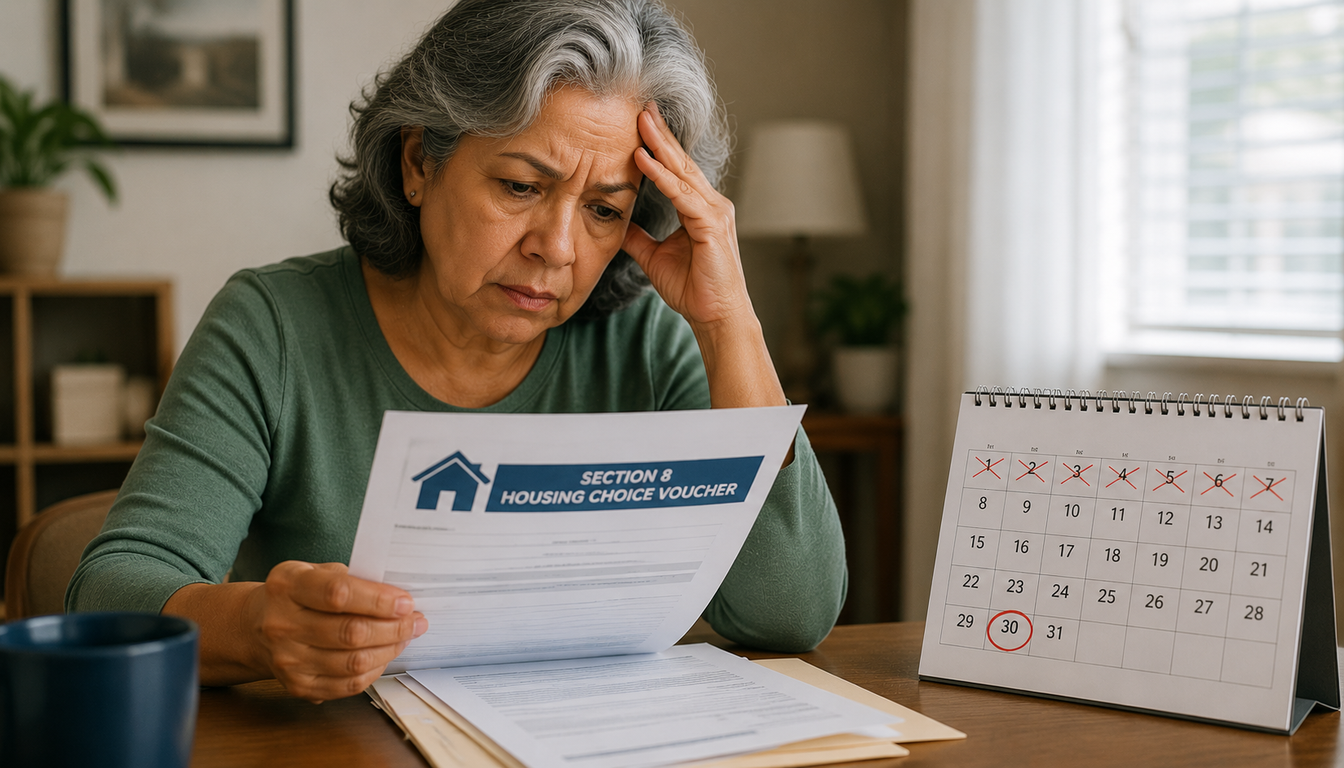

If you've never applied for Section 8 before, the process can seem unclear from the outside. There are income limits to understand, a housing authority to contact, documents to gather, and a waitlist to navigate. But when you break it down step by step, each part is straightforward.
This guide walks you through the entire process from start to finish — from checking whether you qualify to what happens after your name reaches the top of the waitlist. Follow these steps in order and you'll be as prepared as possible going in.
Step 1: Understand What Section 8 Actually Is
The Section 8 Housing Choice Voucher Program is a federal rental assistance program funded by the U.S. Department of Housing and Urban Development (HUD). It helps low-income households pay for housing in the private rental market.
Here's how it works: if you qualify and receive a voucher, you find your own apartment or house. The voucher covers a portion of your rent each month — paid directly to your landlord — and you pay the remainder, which is typically around 30% of your adjusted monthly income.
The program is run locally by Public Housing Authorities (PHAs). There are PHAs in cities and counties across the entire country, and each one manages its own waitlist, sets its own local rules, and handles its own applications. This means the process looks slightly different depending on where you live — but the core steps are the same everywhere.
Step 2: Check Whether You Qualify
Before you do anything else, confirm that your household is likely eligible. The main factors are:
Income. Your total gross household income must fall below the income limit for your area and household size. These limits are based on the Area Median Income (AMI) for your county or metropolitan area, which HUD calculates and updates every year. For Section 8, the standard limit is 50% of your local AMI — though HUD requires that at least 75% of new vouchers go to households at or below 30% of AMI.
Use HUD's income limits database to look up the exact figures for your location and household size.
Citizenship or eligible immigration status. At least one member of your household must be a U.S. citizen or eligible non-citizen. Mixed-status households — where some members are eligible and others are not — can still qualify for partial assistance.
Background and rental history. PHAs screen applicants for criminal history and past rental behavior. Certain convictions — particularly drug-related felonies and sex offender registration — can disqualify an applicant. Review HUD's fact sheet on HCV eligibility for a full breakdown of what's evaluated.
Household size. Every person who lives in your home and uses it as their primary residence counts toward your household size. This directly affects your income limit — larger households are allowed to earn more.
Step 3: Know Your Numbers Before You Apply
The most prepared applicants are the ones who know their household income before they walk in the door. Here's what to calculate:
Add up all income coming into your household from every source — wages, Social Security, disability benefits, child support, unemployment, pension payments, and any other regular income. Use the gross amount — before taxes — for every source.
This total is what the PHA will compare against the income limit for your household size in your area. Knowing your number ahead of time means no surprises during your application review.
Step 4: Get Your Personalized Eligibility Report at Section 8 AI
Before you contact your local PHA or fill out a single form, get a personalized picture of your eligibility.
Section 8 AI takes your household size, income, and location and generates a personalized housing eligibility report showing which programs match your household right now. For first-time applicants, this is especially valuable because it tells you:
- Whether your household income falls within the Section 8 eligibility range for your area
- Whether your local PHA's waitlist is currently open or closed
- What other housing assistance programs may also be available to you
- What documents you'll need to prepare
Going into your application with this information means you're not guessing. You know which programs apply to your household, and you know whether the waitlist you're about to apply for is even accepting new applicants.
Go to Section 8 AI and get your personalized housing eligibility report before you take another step. It takes just a few minutes and sets the foundation for everything that follows.
Step 5: Find Your Local PHA and Confirm the Waitlist Is Open
Use HUD's PHA contact directory to find the housing authority in your city or county. Call or check their website to confirm:
- Is the Section 8 waitlist currently open?
- How do you apply — online, in person, or by mail?
- Are there any preferences that apply to your household (elderly, disabled, veterans, local residents)?
- What is the deadline to apply if the waitlist has a limited opening window?
Many PHAs only open their waitlists for short periods — sometimes just a few days — before closing them again for months or years. When a waitlist opens, apply immediately. Do not wait.
Step 6: Gather Your Documents
Before you submit your application, collect everything you'll need. Having documents ready speeds up the review process and reduces the chance of delays.
Standard documents for Section 8 applications include:
- Government-issued photo ID for every adult in the household
- Social Security cards for every household member — adults and children
- Proof of income for all income sources: recent pay stubs, Social Security award letters, SSI or SSDI benefit letters, child support documentation, unemployment letters. Get a current benefit verification letter from ssa.gov if you receive any Social Security benefit
- Birth certificates for all household members, especially children
- Proof of current address — a utility bill, bank statement, or current lease
- Immigration documents for any non-citizen household members who are eligible for assistance
If you are missing any documents, start replacing them now. Request a replacement Social Security card through ssa.gov/number-card/replace-card. Replace birth certificates through the vital records office in the state of birth — the CDC's vital records directory has contact information for every state.
Step 7: Submit Your Application
Follow the PHA's specific instructions for submitting your application. Some PHAs accept online applications. Others require in-person submission. Some use a lottery system when the waitlist opens, where all applications submitted during the window are entered into a random draw.
Complete every section of the application accurately and honestly. Errors or omissions — even unintentional ones — can delay your application or result in denial. Double-check every field before you submit.
Keep a copy of your completed application and any confirmation number or receipt the PHA provides. This is your proof that you applied.
Step 8: Get on the Waitlist and Stay Active
Once your application is submitted and accepted, you're on the waitlist. This is not a passive process. Here's what you need to do while you wait:
Keep your contact information current. If your phone number, email, or mailing address changes, notify your PHA immediately. Notices that go unanswered because your contact information is outdated will result in your application being removed.
Respond to every notice. PHAs periodically send reconfirmation letters asking whether you still want to remain on the waitlist. Miss the deadline to respond, and your spot is gone. Read every piece of mail from your housing authority.
Report household changes. If your income, household size, or other circumstances change, report them to your PHA. Changes can affect your eligibility and your position in line.
Check your status regularly. Some PHAs provide ways to check your place on the waitlist online or by phone. Ask your PHA what options are available.
Step 9: When Your Name Is Called
When the PHA contacts you, things move quickly. You'll be scheduled for an eligibility interview where your income and household information will be verified. Bring every document on the list from Step 6 — originals and copies.
If everything checks out, you'll receive your Housing Choice Voucher. It will come with an expiration date — typically 60 to 120 days — during which you must find a qualifying unit. Start looking immediately. The unit must pass a HUD housing quality inspection and the rent must fall within your PHA's local payment standard based on HUD's Fair Market Rents.
Apply to More Than One Program
Section 8 is not your only option. Public housing, project-based rental assistance, and state or local programs may also be available in your area. Apply to every program you qualify for at the same time — there is no rule against being on multiple waitlists simultaneously. The National Low Income Housing Coalition tracks rental assistance programs by state and is a useful resource for finding options beyond federal Section 8.
And for help finding available affordable housing listings and participating landlords in your area, visit our partner site Section 8 Search — a practical tool for first-time applicants and experienced voucher holders alike.
The Bottom Line
Applying for Section 8 for the first time is a process with clear steps. Check your eligibility. Get your personalized report. Find your PHA. Gather your documents. Apply when the waitlist opens. Stay active while you wait. And be ready to move when your name is called.
Start at Section 8 AI, get your personalized housing eligibility report, and take the first step today — informed, prepared, and pointed in the right direction.