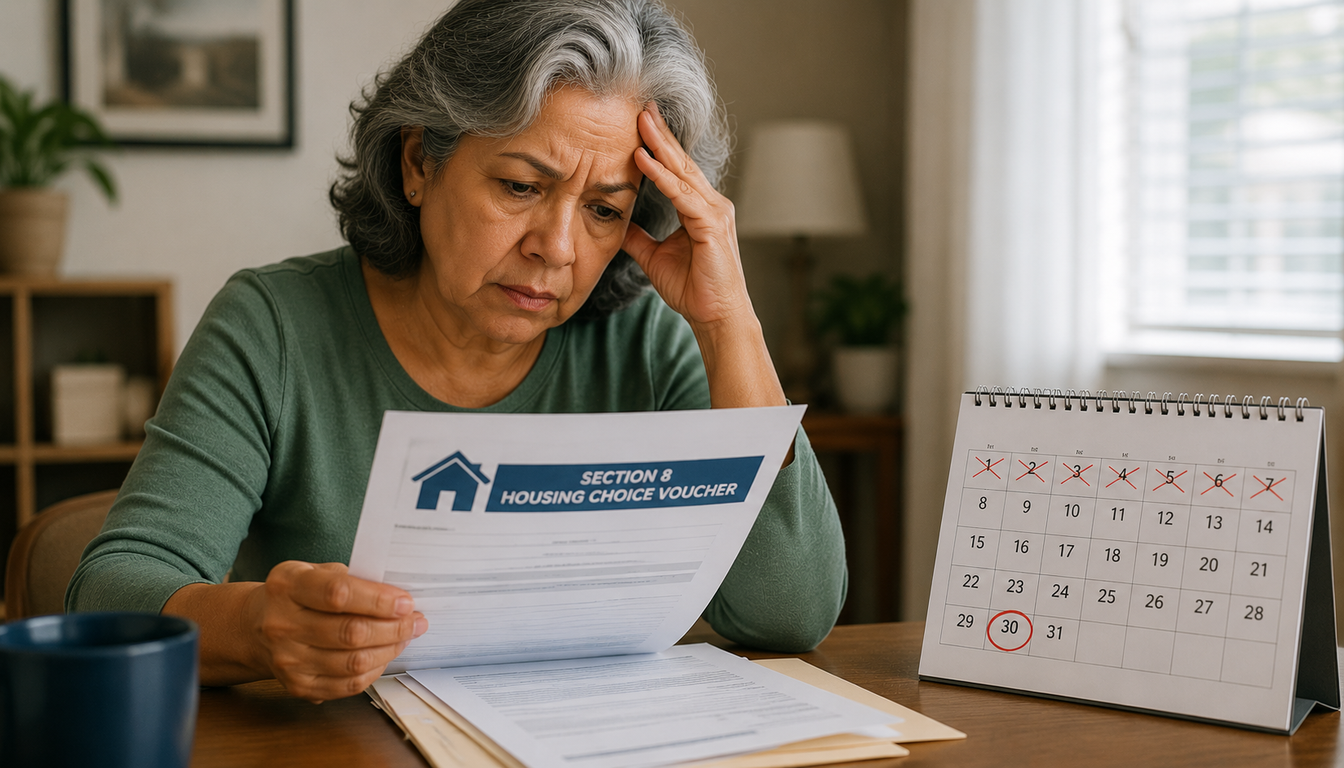

Life changes — and when you're receiving Section 8 assistance, those changes need to be reported to your housing authority. Getting married or having a baby are two of the most common life events that affect a household's housing assistance, and both come with specific rules about what to report, when to report it, and how it changes your benefit.
This article walks through exactly what happens in each situation, so you can handle the change correctly and avoid any problems with your assistance.
The General Rule: Report Every Household Change
Whether you're getting married, having a baby, or experiencing any other change in your household, the rule is the same: notify your local Public Housing Authority (PHA) as soon as possible. Most PHAs require changes to be reported within 10 to 30 days, depending on their specific policy.
This isn't optional. The HUD guidelines on participant obligations make clear that keeping your household information accurate and current is a requirement of staying in the Housing Choice Voucher Program. Reporting changes protects you — it ensures your rent is calculated correctly and your assistance stays in good standing.
What Happens When You Have a Baby
A new baby is automatically considered an addition to your household. Here's what that means for your voucher:
Report the birth to your PHA right away. Most housing authorities require this within 10 to 30 days of the birth. You'll need to provide a copy of the birth certificate once it's available, along with the baby's Social Security number once it has been issued.
Your household size increases. This is generally good news for your benefit calculation. A larger household size typically means:
- A higher dependent deduction, which lowers your adjusted income
- Potential eligibility for a larger unit size, since HUD's Housing Quality Standards and most PHA policies require adequate space for the number of people in a household
- A higher income limit overall, since program income limits scale with household size based on the Area Median Income (AMI) for your area Your rent portion may decrease. Because the dependent deduction reduces your adjusted income, and your 30% rent calculation is based on that adjusted figure, having a new dependent often lowers your monthly rent contribution — even if your gross income hasn't changed.
You may become eligible for a larger voucher. If your current unit is too small for your new household size, your PHA may issue you a voucher for a larger unit. This is determined by your PHA's occupancy standards, which set the number of bedrooms appropriate for a given household size.
Get the baby's Social Security number as soon as possible. You can apply for a Social Security number for a newborn directly through the hospital at the time of birth in most states, or afterward through the Social Security Administration. Having this document ready speeds up your reporting process with your PHA.
What Happens When You Get Married
Marriage changes your household in a different way — and the impact on your voucher depends heavily on whether your new spouse will be living with you.
If your spouse will live with you: You must add them to your household and report the marriage to your PHA. This requires:
- A copy of your marriage certificate
- Your spouse's Social Security card and photo ID
- Documentation of your spouse's income from all sources
Your spouse's income gets added to your household's total income, which is then used to recalculate your adjusted income and your rent portion. If your spouse has significant income, your rent contribution will likely increase. If your spouse has little or no income, the impact may be smaller — and the household size increase may offset some of the income increase through deductions.
Your spouse must also pass screening. Most PHAs require new adult household members to go through the same background and eligibility screening as the original applicant — including criminal background checks. If your spouse has a disqualifying factor, such as certain criminal convictions, this could affect your household's continued eligibility. Review HUD's eligibility guidelines for specifics on what's evaluated.
If your spouse will NOT be living with you: You are still required to report the marriage, but if your spouse maintains a separate primary residence, they typically would not be added to your household or counted in your income calculation. Be prepared to provide documentation showing your spouse's separate address if this is your situation.
Your income limit changes. Since household size affects the income limit you must stay under, adding a spouse changes that threshold. If your combined household income exceeds the limit for your new household size, this could affect your continued eligibility — though this typically results in a gradual rent increase rather than immediate termination, since the program is designed to phase out support as income rises rather than cut it off abruptly.
What If the Change Pushes You Over the Income Limit?
If adding a spouse's income — or any other household change — pushes your total household income above the eligibility threshold, you won't be removed from the program overnight. Section 8 doesn't work that way.
Instead, your rent contribution increases as your income rises. If your 30% contribution eventually equals or exceeds the actual cost of the unit, your subsidy effectively phases down to zero, and your PHA may determine you no longer need the voucher. This is a gradual process tied to your situation, not an automatic penalty for getting married.
If you're concerned about how a marriage might affect your assistance, contact your PHA before making changes to your living situation to understand exactly how your specific numbers would shift.
Documents You'll Need to Report These Changes
For a new baby:
- Birth certificate (once available)
- Social Security number for the child
For a marriage:
- Marriage certificate
- Spouse's photo ID
- Spouse's Social Security card
- Proof of spouse's income from all sources
Having these ready when you report the change to your PHA speeds up the recalculation process and avoids delays.
Know Your Household's Full Picture at Section 8 AI
Life changes affect more than just your current Section 8 benefit — they can also affect what other programs your household qualifies for. If you've recently gotten married, had a baby, or are anticipating either, it's worth getting a fresh look at your household's eligibility across all available housing assistance programs.
Section 8 AI generates a personalized housing eligibility report based on your current household size, income, and location. Whether your household has grown through marriage or a new baby, your report reflects your updated numbers and shows you which programs are available to you now.
Go to Section 8 AI and get your personalized housing eligibility report. Understanding how your new household size and income affect your options helps you plan ahead — whether that means staying in your current voucher program or exploring whether a larger unit or different program is now a better fit.
What Not to Do
It's worth saying directly: do not delay reporting a marriage or a new baby, and do not leave a new spouse off your household paperwork because you're worried about the income impact.
Failing to report these changes is considered a program violation. PHAs verify household composition during annual recertifications and may discover unreported changes through other means — tax records, address verification, or routine audits. The consequences for unreported changes can include repayment of subsidies you weren't entitled to, program termination, and in serious cases, being barred from future housing assistance.
Reporting honestly and promptly protects your standing in the program, even if it means a rent increase. The HUD Office of Inspector General actively investigates unreported income and household changes, so it's never worth the risk.
Additional Resources
- Report changes to your PHA: HUD's PHA contact directory
- Apply for a Social Security number for a newborn: ssa.gov/number-card
- HUD participant obligations and rules: HUD's HCV fact sheet
- Income limits by household size: HUD's income limits database
- Find affordable housing that fits your growing household: Visit our partner site Section 8 Search to browse listings in your area
The Bottom Line
Getting married or having a baby changes your household — and your Section 8 voucher adjusts along with it. Report every change promptly, bring the right documents, and understand that these adjustments are designed to reflect your real situation, not punish you for it.
Go to Section 8 AI, get your personalized housing eligibility report, and see exactly how your growing household affects your housing assistance options today.